
Obsessive-Compulsive Disorder (OCD)
When Certainty Feels Impossible

Living with OCD can be exhausting. Whether you're caught in endless checking, constantly seeking reassurance, avoiding situations that trigger fear, or battling intrusive thoughts that seem impossible to ignore, OCD can begin to take over daily life.
OCD has a way of convincing you that if you could just be a little more certain, a little more careful, or a little more reassured, the anxiety would finally go away. Unfortunately, the road to certainty often leads to even
more uncertainty.
The good news is that OCD is highly treatable. Through evidence-based CBT and Exposure and Response Prevention (ERP), you can learn to respond differently to uncertainty, reduce compulsions, and regain the freedom to focus on what matters most.

What is OCD?
Obsessive-Compulsive Disorder (OCD) is a condition characterized by obsessions and compulsions.
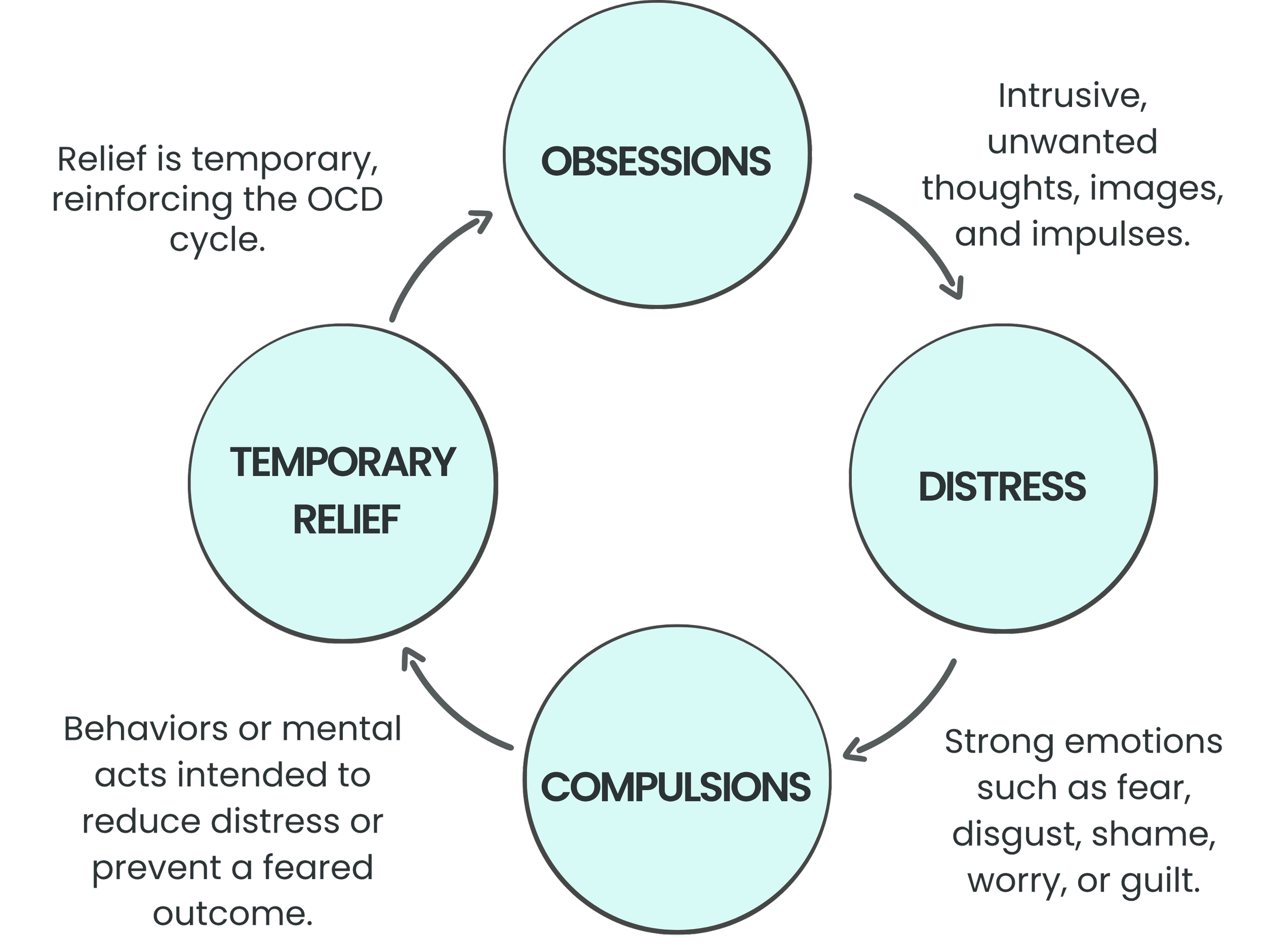
Obsessions are unwanted, intrusive thoughts, images, or urges that create distress or uncertainty. They often feel inconsistent with your values and can be difficult to dismiss, even when you recognize they don't make logical sense.
Compulsions are behaviors or mental rituals performed in an attempt to reduce distress or gain certainty. Although they may bring temporary relief, they ultimately strengthen OCD, making the cycle more difficult to break.
OCD can look very different from person to person. Some individuals experience visible rituals, while others struggle primarily with mental compulsions or internal reassurance. No matter how OCD shows up, it can become time-consuming, emotionally draining, and interfere with daily life.
Common Signs and Symptoms
While the content of obsessions may differ, OCD follows the same pattern: intrusive thoughts create distress, compulsions provide temporary relief, and the cycle repeats.
Excessive checking
Contamination fears and cleaning rituals
Intrusive thoughts related to harm, relationships, religion, or sexuality
A strong need for certainty or reassurance
Repeating behaviors until they feel "just right"
Mental reviewing, counting, or analyzing
Avoiding situations that trigger obsessive fears
How Therapy Can Help
At Bridges CBT, I use Cognitive Behavioral Therapy (CBT) with Exposure and Response Prevention (ERP), the gold-standard treatment for OCD.
ERP helps you gradually face situations that trigger obsessive fears while resisting the compulsions that keep OCD going. As you practice responding differently, your brain learns that uncertainty and discomfort can be tolerated without relying on rituals or reassurance.
Every treatment plan is individualized to your unique symptoms, goals, and pace.
How ERP Breaks the OCD Cycle
ERP isn't about getting rid of thoughts—it's about changing your relationship with them.
Therapy can help you:

Respond differently to intrusive thoughts
Reduce compulsions and reassurance seeking
Build tolerance for uncertainty
Increase confidence in managing distress
Spend more time focused on the life you want to live—not on OCD
What to Expect
Beginning treatment for OCD can feel intimidating, especially if you've heard about exposure therapy.
ERP isn't about forcing you into overwhelming situations or expecting perfection. Instead, I'll work alongside you to better understand how OCD operates, identify the patterns keeping it going, and gradually practice new ways of responding. Each step is collaborative, intentional, and designed to build confidence over time.
You'll also leave sessions with practical strategies to apply between appointments, allowing progress to continue outside the therapy room.
OCD can be incredibly convincing, but it doesn't have to define your life.
With evidence-based treatment and consistent practice, many people experience meaningful improvement and regain the freedom to make choices based on their values instead of their fears.
If OCD has been getting in the way of the life you want to live, know that change is possible—and you don't have to navigate it alone.
Common Questions About OCD
It's natural to have questions before starting therapy. Here are answers to a few of the questions I hear most often.
-
It's completely normal to feel nervous about starting ERP. Because treatment involves facing situations that OCD has taught you to avoid, it's common for anxiety—or even symptoms—to feel a little worse before they get better. While that can feel discouraging at first, it's often a sign that you're learning to respond differently instead of relying on compulsions. The good news is that it does get better. As you continue practicing these skills, many people notice their anxiety becomes more manageable and OCD begins to lose its grip.
-
No. ERP is a collaborative process, not something that's done to you. Together, we'll create a treatment plan based on your symptoms, goals, and comfort level. I'll help you understand the purpose behind each exercise, and we'll move at a pace that is both supportive and appropriately challenging. The goal is to help you build confidence one step at a time—not to overwhelm you or expect perfection.
-
Every person is different, but many clients can expect treatment to last approximately 12–28 sessions. During our initial assessment, I'll develop a much better understanding of your symptoms and goals, allowing me to provide a more individualized estimate of what treatment may look like for you.
Some people complete treatment within that timeframe, while others choose to continue longer. This may be because symptoms are more complex, additional concerns arise during treatment, or they value ongoing support and accountability as they continue practicing the skills they've learned. My goal is to provide the level of support that best fits your needs.
-
Yes. Exposure and Response Prevention has been shown to be highly effective for children and adolescents when it's tailored to their developmental level. Parents often play an important role in treatment by learning how to respond to OCD in ways that support progress rather than unintentionally reinforcing symptoms. When appropriate, I'll work closely with both your child and your family to help everyone feel confident in the treatment process.
Ready to Build Confidence Instead of Certainty?
If OCD is interfering with your life or your child's life, I'd be honored to help.
Together, we'll develop the skills needed to reduce anxiety, break free from compulsions, and build a life that's guided by your values rather than OCD.