
Specific Phobias
When Fear Begins to Shrink Your World

Living with a phobia can be exhausting. Whether it's needles, vomiting, flying, driving, heights, animals, or another specific fear, anxiety often begins long before you ever encounter the situation itself. Many people spend significant time avoiding triggers, preparing for "what if" scenarios, or changing their routines just to feel safe.
The good news is that specific phobias are highly treatable. With the right approach, you can gradually face your fears, reduce avoidance, and regain the freedom to do the things that matter most.
What Is a Specific Phobia?
Specific phobias involve an intense fear of a particular object or situation that feels far greater than the actual level of danger. While many people dislike things like needles, flying, heights, or spiders, a phobia goes beyond simple dislike or discomfort. The fear becomes so overwhelming that it can lead to avoidance, significant distress, or interfere with daily life.
Unlike generalized anxiety, which tends to involve worries about many different areas of life, specific phobias are focused on one particular trigger. Common examples include fears of needles, vomiting (emetophobia), flying, driving, blood, storms, enclosed spaces, animals, or certain medical or dental procedures.
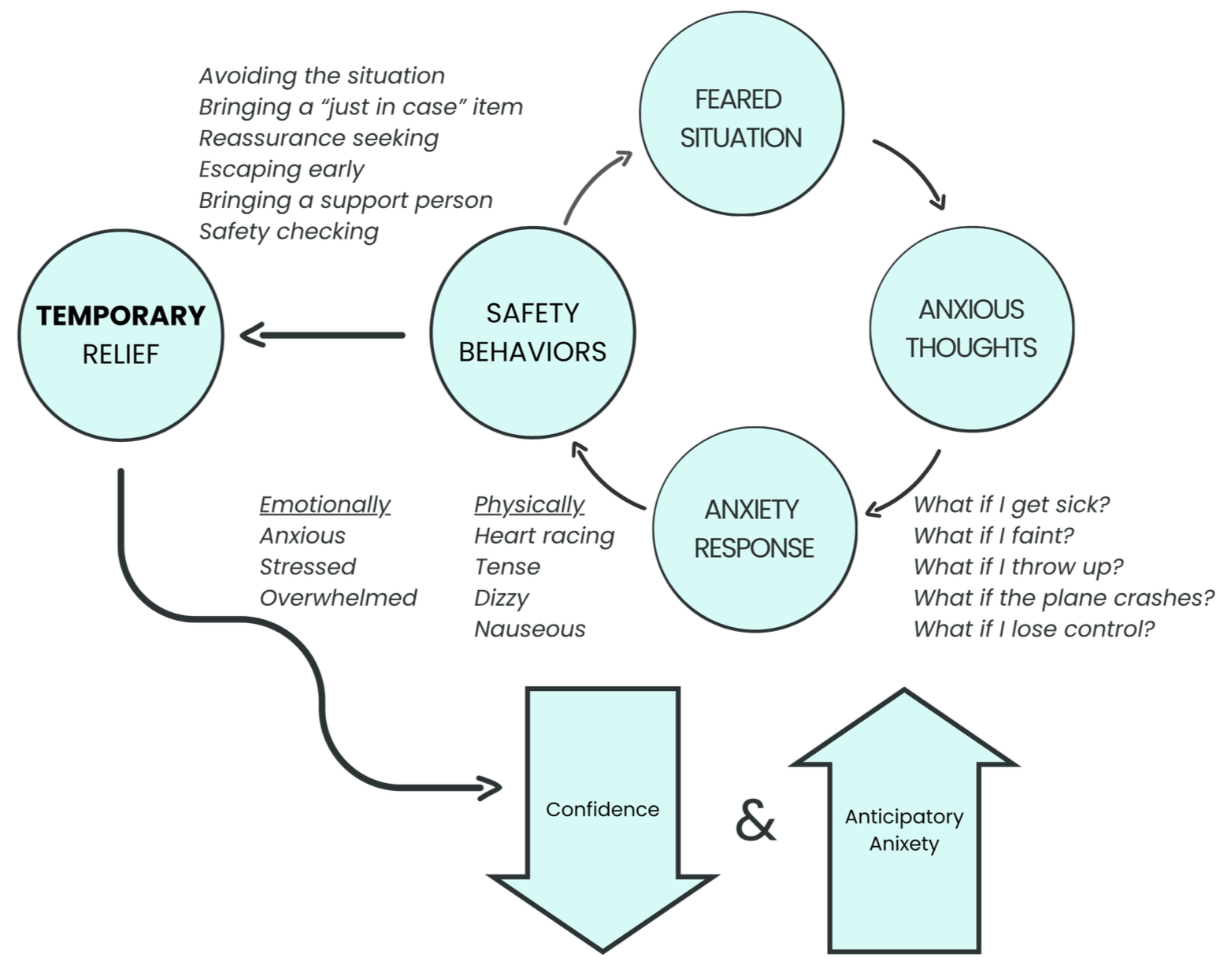
What makes phobias so frustrating is that the fear often begins long before the situation itself. Many people spend days—or even weeks—anticipating an upcoming event, mentally preparing for everything that could go wrong, or looking for ways to avoid it altogether. While avoidance provides temporary relief, it also prevents the brain from learning that the situation may be safer and more manageable than anxiety predicted.
Over time, the cycle can become smaller and smaller. A person who once avoided only one situation may begin avoiding similar situations, changing routines, relying on others, or missing out on opportunities that matter to them.
The encouraging news is that specific phobias are among the most treatable anxiety disorders. Through Cognitive Behavioral Therapy (CBT) and Exposure and Response Prevention (ERP), you can gradually face feared situations, develop new learning, and build confidence in your ability to tolerate uncertainty and discomfort. The goal isn't to eliminate fear overnight—it's to help your brain discover that you're capable of handling much more than anxiety has led you to believe.
Understanding the Phobia Cycle
Avoidance works in the short term because anxiety usually decreases once the feared situation is escaped or avoided. Unfortunately, this teaches the brain that avoidance was what kept you safe, making the fear feel even more believable the next time the situation arises.
Each time the cycle repeats, confidence decreases while anxiety often grows.
Breaking the Cycle
By responding differently, the cycle begins to change. Rather than avoiding feared situations, CBT and Exposure and Response Prevention (ERP) help you gradually approach them in a safe, structured way. Each experience becomes an opportunity for corrective learning, helping your brain discover that anxiety naturally rises and falls, discomfort is manageable, and feared outcomes are often less likely—or more manageable—than anxiety predicted.
The goal isn't to eliminate fear overnight. The goal is to build confidence in your ability to handle it.
As confidence grows, avoidance begins to shrink—and life begins to expand again.
Freedom Begins One Step at a Time
Many people living with phobias spend years organizing their lives around fear. The encouraging news is that meaningful change doesn't require feeling fearless before taking action.
Instead, confidence grows through experience. Exposure is gradual and personalized. We might start with something that feels challenging but manageable—like looking at a picture, watching a video, or practicing being near a feared situation—and build from there.
Each small step becomes an opportunity for your brain to learn something new—that anxiety is temporary, uncertainty is manageable, and you're more capable than fear led you to believe.
Over time, those experiences become the foundation for lasting confidence and greater freedom.
Phobias I Commonly Treat
◌ Needle Phobia
◌ Fear of Vomiting (Emetophobia)
◌ Flying
◌ Driving
◌ Blood & Injury
◌ Medical & Dental Procedures
Don't see your specific fear listed? Many phobias respond well to the same evidence-based principles. During your consultation, we'll discuss your unique concerns and determine whether CBT and ERP are a good fit.

"Courage isn't the absence of fear. It's choosing to move forward despite it."
Common Questions About Phobias
It's natural to have questions before starting therapy. Here are answers to a few of the questions I hear most often.
-
No. Treatment is collaborative and moves at a pace that's challenging enough to promote growth while still feeling manageable. Together, we'll develop a gradual plan that helps you build confidence one step at a time.
-
Many clients notice meaningful improvement within 8–20 sessions, although treatment length depends on the specific phobia, how long it's been present, and your individual goals. Following your assessment, I'll provide a more personalized recommendation.
-
Avoidance is one of the reasons phobias persist—but it's never too late to begin changing the cycle. Many people have lived with their fears for years or even decades before starting treatment.
-
Yes. I work with children, adolescents, and adults. Treatment is always tailored to the individual's developmental level, goals, and the specific fear they're experiencing. Parents are often an important part of the treatment process for younger children.
Ready to Expand Your World?
If a specific phobia is interfering with your life—or your child's life—I'd be honored to help.
Together, we'll gradually build the confidence and skills needed to face fears, reduce avoidance, and create a life that's guided by your values rather than anxiety.