
Panic Disorder and Agoraphobia
When Your Body Feels Like It's Betraying You

A racing heart. Tightness in your chest. Dizziness. Shortness of breath. A sudden wave of overwhelming fear.
Panic attacks can feel so intense that many people wonder if they're having a heart attack, losing control, or if something is seriously wrong.
Although it feels like your body is betraying you, it's actually trying to protect you.
Your body's alarm system is working exactly as it was designed to—it just begins sounding the alarm when no real danger is present.
The good news is that panic disorder and agoraphobia are highly treatable. With evidence-based treatment, you can learn to trust your body again and return to the life anxiety has been asking you to avoid.

Understanding Panic Disorder
Panic attacks are sudden episodes of intense fear accompanied by very real physical sensations.
Your heart may race. Your breathing may change. You may feel shaky, dizzy, nauseous, detached from your surroundings, or as though you're about to faint.
These sensations are uncomfortable—but they aren't dangerous.
Because panic attacks feel so overwhelming, many people begin fearing another attack more than the first one itself.
That fear often leads to avoiding places where panic feels more likely or where escaping might seem difficult.
Over time, life begins getting organized around avoiding anxiety rather than pursuing what matters most.
This pattern of avoidance is known as agoraphobia, and it commonly develops alongside panic disorder.
Understanding the Panic Cycle
One panic attack doesn't usually become panic disorder.
Instead, it's our interpretation of the experience that keeps the cycle going.
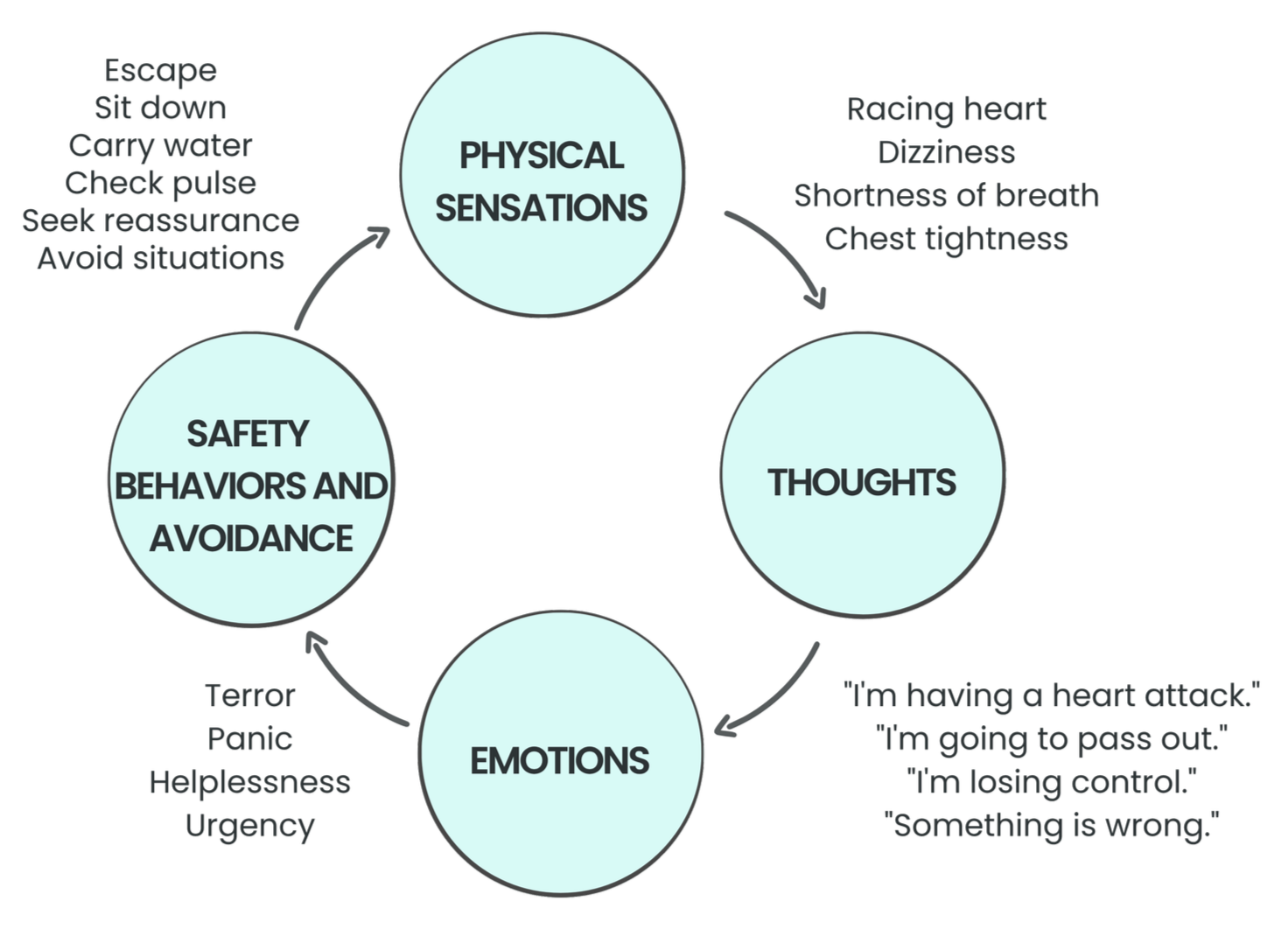
When the brain mistakes normal physical sensations for danger, anxiety increases.
As anxiety increases, the body's alarm system becomes even more activated.
Those stronger physical sensations seem to confirm our fears.
Avoidance and safety behaviors provide immediate relief.
Unfortunately, they also teach the brain that those situations were dangerous all along.
The result?
Panic returns.
Many people believe the goal is to stop panic attacks from happening.
In reality, treatment has a different goal:
To teach your brain that anxiety is uncomfortable — but not dangerous.
One way I explain panic is with a simple formula:
Misinterpreting Normal Body Sensations
+
Underestimating Your Ability to Handle Them
Panic
Why Does Panic Feel so Intense?
When normal physical sensations are interpreted as dangerous and you doubt your ability to cope, your body's alarm system becomes even stronger.
Treatment helps you learn that these sensations are uncomfortable—but not dangerous—and that you're far more capable of handling them than anxiety wants you to believe.
How CBT and ERP Can Help
CBT helps you understand what's happening in both your mind and your body while teaching practical skills to respond differently when anxiety shows up.
Together we'll work to:
understand your body's alarm system
recognize catastrophic thinking
reduce avoidance and safety behaviors
gradually approach feared situations
rebuild confidence in your ability to cope
One of the most effective treatments for panic disorder is Exposure and Response Prevention (ERP).
Rather than waiting until anxiety disappears, we'll gradually practice approaching the situations and sensations you've learned to fear.
This may include interoceptive exposure, which safely recreates physical sensations like dizziness, increased heart rate, or shortness of breath.
Instead of reinforcing fear, these exercises help your brain discover something incredibly important:
Your body can create these sensations... and you can handle them.
If panic has led you to avoid driving, restaurants, stores, crowds, traveling, or being alone, we'll also gradually work toward reclaiming those parts of your life.
We move at a pace that's collaborative, intentional, and challenging enough to promote growth—without becoming overwhelming.

"Freedom isn't found by waiting for fear to disappear. It's found by discovering that you can move forward even when fear is present."
Common Questions About Panic Disorder
It's natural to have questions before starting therapy. Here are answers to a few of the questions I hear most often.
-
Although panic attacks feel frightening, they are not dangerous. The physical symptoms are your body's normal fight-or-flight response—even though no real danger is present.
-
That's okay. Therapy is one of the safest places to experience anxiety because we'll use those moments as opportunities to practice responding differently rather than avoiding the sensations.
-
Sometimes. Interoceptive exposures are a research-supported part of treatment that safely recreate some of the physical sensations associated with panic. This helps your brain learn that these sensations are uncomfortable—but not dangerous.
-
Treatment often ranges from 12–28 sessions, although everyone's journey is different. Following the assessment, I'll have a much better sense of what treatment may look like for you. Sometimes therapy continues longer if you'd like ongoing support or accountability.
-
The goal of therapy isn't to guarantee you'll never experience anxiety again. It's to help you respond differently when anxiety shows up so that panic no longer controls your life or keeps you from doing the things that matter most.
Ready to Trust Your Body Again?
Panic disorder can make the world feel unpredictable and overwhelming—but you don't have to navigate it alone.
Together, we'll work toward helping you understand your body's alarm system, build confidence in your ability to handle anxiety, and get back to living the life you want.